When you book your first riding lesson or plan a day at a guest ranch, knowing what to wear makes the difference between a comfortable, confident experience and an uncomfortable one. Proper riding gear isn't just about looking the part: it's about safety, functionality, and preventing the chafing and soreness that often sideline new riders. The good news: you don't need to spend hundreds on specialized equipment before your first ride. This guide walks you through the essentials, explains what works and why, and helps you separate the must-haves from the nice-to-haves. Whether you're heading out for English lessons, a western trail ride, or a guest ranch experience, the right clothing and footwear will set you up for success. Call ahead to ask your stable what's required, most instructors have specific gear policies in place for safety reasons.
The Helmet & Head Safety
Your riding helmet is non-negotiable. A helmet protects your head in the event of a fall, and regardless of your age or experience level, you should wear one every time you're mounted. Many stables and instructors require helmets as a condition of riding, and for good reason, head injuries are the most serious risk in riding accidents. Look for a helmet certified for equestrian use: in the US that means ASTM F1163 certified by SEI, the independent body that verifies the helmet was actually tested to the standard; in Europe the current standards are EN 1384:2023, PAS 015, or VG1. A bike, skate, or ski helmet is not a substitute: equestrian helmets are built for a different impact profile, including protection for the back of the head in a fall. The helmet should fit snugly without being tight, sitting level on your head about an inch above your eyebrows, with the chin strap fastened securely under your jaw.
If you don't own a helmet yet, most riding stables will provide one or require you to purchase a certified option before your lesson. If you're shopping for your own, expect to spend between roughly $75 and $300 depending on brand and features. A basic helmet from an established equestrian brand is perfectly adequate for lessons and recreational riding. Fancier designs with better ventilation or premium materials are nice-to-haves that become appealing once you're riding regularly. When trying on a helmet, ensure it doesn't shift when you move your head or fasten the chin strap. A poorly fitting helmet won't protect you properly and will distract you during your ride.
Boots & Footwear
Proper footwear is crucial for both safety and comfort in the saddle. Riding boots or tall boots designed specifically for horseback riding are ideal: they support your ankle, protect your calf from the stirrup and saddle, and provide the heel height and smooth sole that regular shoes lack. The heel prevents your foot from slipping through the stirrup, which is a significant safety risk with sneakers or flat-soled shoes. When your foot slides through the stirrup, you can become caught if the horse spooks or moves suddenly.
If you're just starting out, you may be able to borrow boots from your stable or instructor, or invest in an affordable pair from a tack shop or online equestrian retailer (roughly $60–$150 for basic options). As you progress, you might explore other styles like paddock boots (shorter, ankle-height) or field boots (taller, more formal). For now, focus on the essentials: a defined heel of about 1 to 1.5 inches (roughly an inch on English paddock and field boots, about an inch and a half on Western boots), plus a smooth sole that won't catch. A traditional cowboy boot with its slanted riding heel is a perfectly good Western choice, the angled heel is designed to seat and hold the stirrup. What you want to avoid are work boots with thick lug soles and wide, square toes, which can jam in the stirrup and don't release cleanly. Sneakers are dangerous and should never be worn while riding, regardless of their grip or ankle support. If tall boots are out of budget, paddock boots worn with half-chaps give you the same lower-leg coverage and are the standard affordable English setup.
Pants & Lower Body
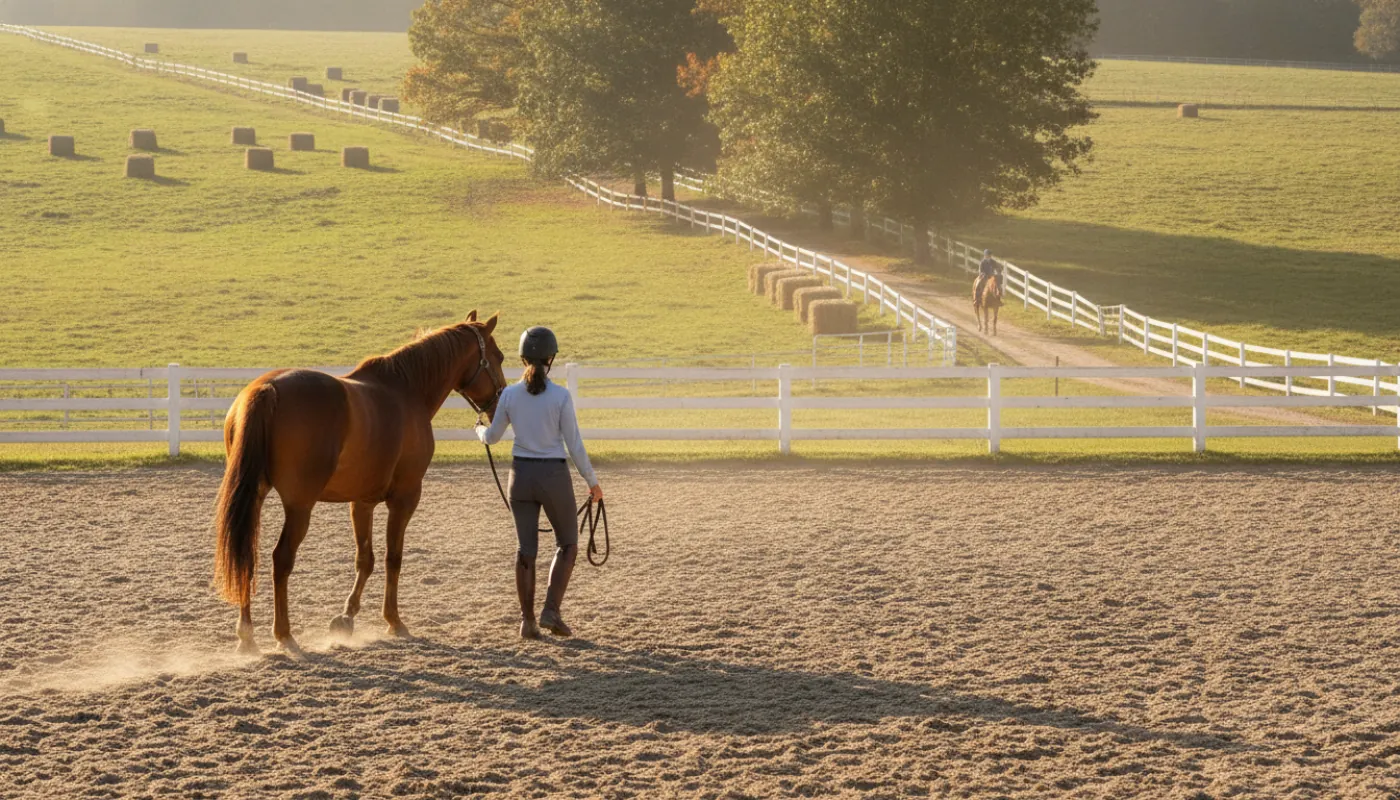
Long pants protect your legs from chafing against the saddle and stirrup leathers, and they provide some protection if you fall or brush against brush or fence lines on a trail ride. Riding tights, jodhpurs, or jeans designed for riding are your best options. Riding tights, form-fitting stretchy pants that end at the ankle, are popular with English riders and offer excellent comfort and freedom of movement. They come in various thicknesses; lighter versions work for lessons and indoor arenas, while heavier ones add warmth for outdoor winter rides. Jodhpurs and breeches, close-fitting stretch trousers designed to prevent rubs and keep the leg in contact with the saddle, are the traditional English choice. Western riders typically wear jeans or purpose-made riding jeans instead.
Regular jeans can work for casual trail riding and western lessons, but dedicated riding pants are designed with reinforced areas and stretch that jeans lack. Avoid pants with seams or thick inside seams that will rub your inner thigh and cause soreness after just one ride, this is one of the most common beginner complaints and is easily prevented by choosing the right pants. Make sure whatever you wear allows freedom of movement at the hip and knee, and avoid anything so tight that you can't walk or mount comfortably. Layering your lower half is smart for temperature control: wear riding tights or pants over lightweight leggings in cold weather, or consider lighter riding tights for summer rides.
Jacket & Upper Body
Your upper body needs protection from the elements and some coverage for safety. A light jacket or riding-specific shirt is ideal. For English riding, many riders wear jackets that match their riding style: hunt coats for formal lessons, casual blazers for schooling, or riding jackets made of stretchy fabric for maximum comfort. For western riding and trail rides, a simple long-sleeved shirt, denim jacket, or fleece will do. Long sleeves protect your arms from sun, brush, and minor scrapes on the trail. Avoid anything baggy or with loose fabric that could flap, startle the horse, or catch on saddle hardware.
Layering is your friend, especially when you're riding outdoors or early in the morning. A base layer under your riding shirt keeps you warm without bulk, and you can add a vest or light jacket as temperatures drop. In cold weather, many riders wear insulated riding tights and a heavier jacket; in summer, opt for a breathable short-sleeved shirt or sleeveless option under a lightweight layer for sun protection. Your hands should be covered: riding gloves keep your hands warm, improve your grip on the reins, and protect your skin from blisters and the occasional rope burn. Basic riding gloves are inexpensive and widely available at most tack shops.
Final Gear Check & Safety Tips
Before your first ride, do a quick safety checklist with your instructor or stable staff. Make sure your helmet is certified and fits properly, your boots have the right heel height and won't slip off, and your pants allow full range of motion at the hip and knee. Bring water and dress for the weather, you may feel cool standing around before the ride, but you'll warm up quickly once you're mounted. If the weather is unpredictable, dress in layers you can remove or add as needed. Don't hesitate to ask your stable what else they recommend based on the specific riding you'll be doing.
One final note: don't show up over-dressed or under-prepared. New riders sometimes arrive in full competition gear or borrowed equipment that doesn't fit, and the result is discomfort that interferes with their ability to learn and enjoy the experience. Most riding stables and instructors are happy to advise you on what to wear before your first visit. Call ahead and ask. Your instructor has seen hundreds of riders in their first lesson and will help you adjust anything that's not working. The goal is to feel secure, move freely, and focus on the horse and your position, not your itchy pants or slipping boots. With the right gear and a little preparation, your first ride will be a positive memory you'll want to repeat.