The Rocky Mountains offer some of North America's most spectacular trail riding terrain. From Colorado's high meadows to Wyoming's remote backcountry and Montana's wilderness valleys, the region hosts stables that combine serious horsemanship with genuine mountain expertise. Whether you're a confident intermediate rider looking for multi-day pack trips or a cautious beginner wanting a half-day guided ride, the best Rocky Mountain stables match horses to riders with precision, maintain their stock to championship standards, and navigate terrain that demands both skill and judgment. This guide identifies what separates excellent trail operations from the rest, and where to find them across the region.
What Separates Top Trail Stables from the Rest
A stable's trail reputation rests on three non-negotiable foundations: horse quality, guide expertise, and honest rider assessment. The best operations in the Rockies don't oversell their trails or push inexperienced riders onto difficult terrain for the sake of a bigger group. They size horses to riders by weight and temperament, not convenience. But be realistic about limits: most Rocky Mountain stables cap riders somewhere between about 200 and 240 pounds, only a handful accommodate 250 or more, and many scale the cap to rider height and ride difficulty. If anyone in your party is near or above that range, call ahead and confirm before building a day around it. A good stable matches a heavier rider to a sound, strong mount rather than turning them away at the trailhead, but only when the right horse is available.
Guide experience in mountains differs sharply from flatland trail riding. High-altitude navigation, weather pattern recognition, and self-rescue competency separate professional outfitters from weekend ride services. The best guides carry emergency supplies, understand how horses respond at elevation, and know the difference between "that horse can make this climb" and "that horse will panic on this climb." They communicate directly about rider ability without false comfort, "I'm seeing some tension in your seat; let's work on that before we head up steeper terrain" is the conversation that builds trust.
Stable facilities matter as a hygiene check. Well-maintained corrals, clean water systems, and organized tack rooms reflect the detail-orientation that extends to horse care. Major Red Flags: trail rides where you meet your horse five minutes before departure, stables that can't articulate their horse-rotation policy, or operations that treat trail riding as pure volume business. Better stables track individual horse fatigue, rotate inventory intelligently, and turn away business rather than stretch their herd.
Colorado: High-Altitude Specialists
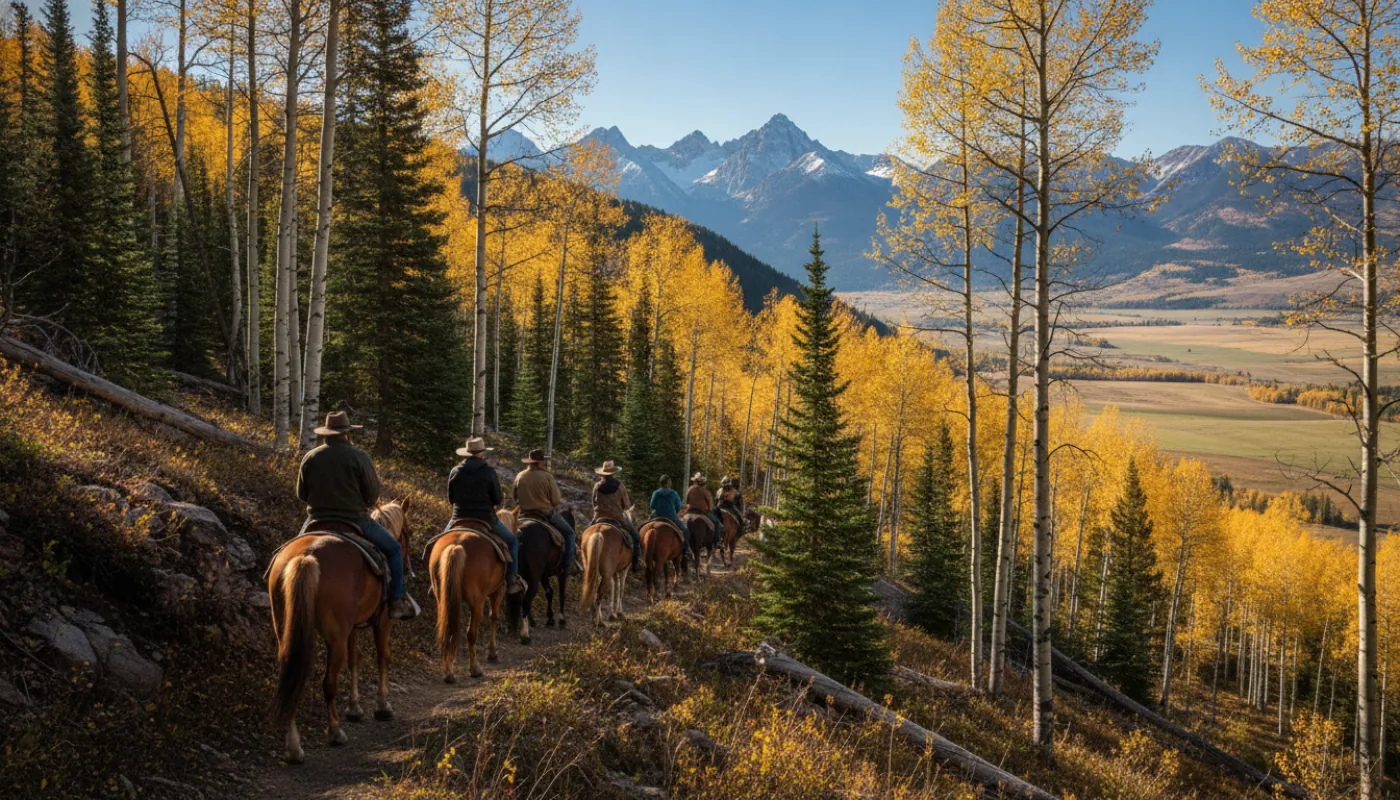
Colorado's trail stables benefit from geography: thousands of miles of trail thread the national forests and private ranch land across the central and western regions, much of it packed and well-marked. The state's best operations specialize in high-elevation riding: trails that climb into aspen groves at 10,000+ feet, where altitude adaptation and horse conditioning become real factors.
The premium Colorado stables draw from the guest-ranch tradition. Multi-day operations around the Vail, Aspen, and Telluride corridors offer ride-and-lodge packages that pair quality horsemanship instruction with backcountry skill-building. These operations run their own horse herds year-round, which filters out any stable relying on seasonal lease horses. Full-time stock management means the herd learns the local trails, develops relationships with guides, and builds the solid temperament that matters on long mountain days.
One- or two-day operators around Rocky Mountain National Park and the Indian Peaks Wilderness serve a different market: visitors who want immersion without the week-long commitment. The better ones limit group sizes aggressively (six riders per guide is standard; eight is the ceiling), maintain a high horse-to-rider ratio for flexibility, and screen beginner riders honestly. "Your description fits a strong intermediate" is harder to hear than "sure, come along," but it separates operators who care about the ride experience from those optimizing for revenue.
Look for Colorado stables offering preparatory lessons before your trail date, especially multi-day operations. A day or two of arena work on the ranch's horses before heading into steep terrain catches seat issues, builds confidence, and lets the stable assess whether a rider needs a more forgiving horse or a more experienced guide.
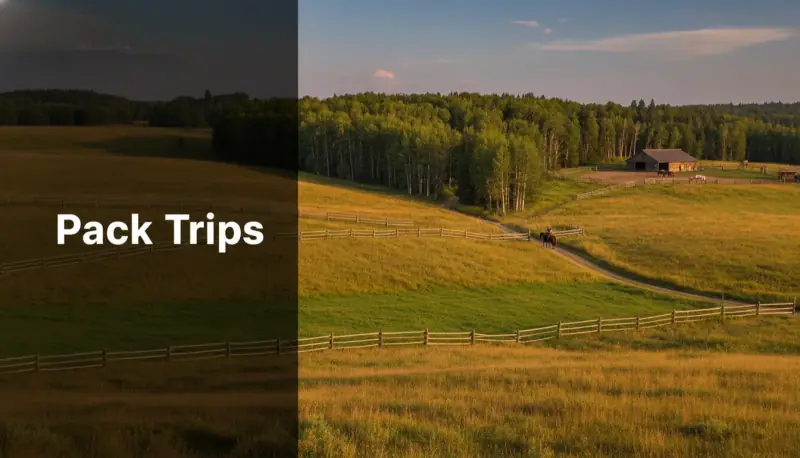
Wyoming: Remote Backcountry and Pack Trips
Wyoming's identity in the trail-riding world rests on one thing: access. The state's vast BLM land, national forests, and private ranches mean true wilderness riding: full days without seeing another trail user, views that stretch 50+ miles, and the silence that comes with elevation and isolation.
Wyoming's premier stables focus on authenticity over amenity. Guest ranches in the Bighorn Mountain range and the southern Wind River Range run more like working cattle operations that accept riders than resort properties that happen to have horses. This isn't a weakness, it's precisely the appeal. You're riding with people who know the country intimately because they live there, not because they read a trail guide.
Pack-trip outfitters (multi-day trips with pack horses carrying gear) are Wyoming's signature offering. A quality pack operation runs its own packers, maintains consistent feed and water caches on established routes, and employs guides who've ridden the same valleys for years. These trips demand fit horses and riders; expect guides to ask blunt questions about your conditioning and saddle-time frequency. A five-day high-country pack trip isn't a vacation ride, it's a mountain expedition that happens from a horse's back.
The best Wyoming stables practice seasonal discipline. They close in winter, rotate pastures aggressively, and keep herd sizes below sustainable carrying capacity. A stable pushing 200 horses through 60,000 acres has already compromised trail quality and horse welfare. Smaller operations (40–80 horses for a full-service guest ranch) signal that you're riding conditioned animals, not exhausted rotation stock.
Montana: Wilderness Outfitters and Working Ranches
Montana stables tend toward the most traditional model: working cattle operations that run guest rides as a secondary enterprise. This model produces exceptional guides because they're genuine ranch hands, not hired-gun adventure guides, who ride the same country year-round and know every boulder, creek crossing, and seasonal hazard.
The state's best stables concentrate in central and western regions: the Absaroka-Beartooth range, the Custer Gallatin National Forest, and private land adjacent to designated wilderness areas. These operations rarely advertise heavily because they operate at or near capacity with word-of-mouth referral. That obscurity is a filter, you're more likely to encounter riders who've already done serious horsemanship work.
Multi-day wilderness rides in Montana often include minimal infrastructure: simple camps, basic meals, and horses tied to trees rather than corralled. This appeals to experienced riders comfortable with genuine backcountry conditions and prepared for weather swings. If you've never ridden an 8-hour day in intermittent rain at 8,000 feet, a Montana wilderness outfitter is not your entry point; a prepared Colorado or Wyoming guest ranch is.
What sets Montana's best stables apart is their refusal to overcomplicate the experience. No themed dinners, no Wi-Fi in the lodge (if there's a lodge), no extensive facility tours. You show up, you ride, the horses are excellent, the guides know the country. The simplicity attracts serious riders and repels casual vacationers, which keeps the overall experience lean and authentic.
Planning Your Rocky Mountain Trail Adventure
Timing and physical preparation matter more in the Rockies than in gentler terrain. Summer (June through September) is the window for high-altitude riding; shoulder seasons (May, October) work for lower-elevation trails but demand flexibility for weather. Book 4–8 weeks ahead for established operations; three months is not excessive for multi-day trips.
Before contacting a stable, know what you're honestly looking for. "Beginner-friendly" ranges wildly: some operations mean "we'll put you on a calm horse and walk," others mean "we expect you to post-trot on the flat." Describe your recent ride history (lessons? trail experience? miles per outing?) and ask how the stable would pair you with a horse and guide. Good stables answer this question specifically, not generically.
Bring conditioning into the conversation. A stable that asks about your fitness level isn't trying to discourage you, they're screening for match. A beginner on a half-day ride around a guest ranch's pastures can be unfit; a beginner on a six-hour ride across rolling terrain needs real cardiovascular prep and saddle time. Being honest saves you from a miserable ride.
Check the limits that can disqualify you before you drive out. Nearly every mountain stable enforces a rider weight cap (commonly 200–240 pounds, sometimes scaled to height and ride length) and a minimum age (often somewhere from 6 to 11 depending on the ride), and a few backcountry operations set both higher. These aren't posted consistently, so ask directly if a weight or age question applies to anyone in your party. And prepare your own body for the elevation, not just the horse's: rides that top out at 8,000 to 10,000-plus feet can bring on altitude sickness in visitors who flew in the day before. Arrive a day or two early if you can, hydrate hard, go easy on alcohol the night before, and watch for headache, nausea, or breathlessness.
Confirm logistics: Does the stable provide helmets (good idea. Ask about it regardless of your habits)? What's their weather cancellation policy? Do they require liability waivers, and does your homeowner's or personal liability insurance cover horse-related activity? What's included in quoted prices (meals, lodging, guides, horse rental), and what's add-on? One more legitimacy check: any outfitter guiding on federal land must hold the right authorization: an NPS concession or commercial-use permit inside a national park, a USFS special-use permit on forest land, a BLM permit on BLM ground. A guide who can name theirs is one operating legally; rides in Rocky Mountain National Park, for instance, run only through the park's authorized concessioners. Rocky Mountain stables vary widely on all of this, and clarity before arrival beats surprises at check-in.
The best trail-riding experience comes from matching your ambition to your readiness. The Rocky Mountains will humble you; the stable's job is to keep that humbling educational rather than dangerous. The best operations in the region do exactly that.