Finding Your Perfect Guest Ranch Adventure
Guest ranches offer something unique: a place where beginners can saddle up without years of preparation, family members can ride at different levels simultaneously, and the experience extends far beyond hourly trail rides. A good guest ranch wraps instruction into a larger vacation experience: meals, lodging, community, and often activities beyond riding. For someone stepping into riding for the first time, this all-in-one model removes the friction of booking a dozen separate services and lets you focus on actually enjoying horses.
The best guest ranches for beginners share common traits: patient horses matched to your ability, instructors who talk you through the basics rather than assuming experience, honest conversations about what you'll actually do, and a culture that celebrates first-timers. They're not hiding from the fact that you're new, they're built for exactly this moment. This guide walks you through what separates the solid places from the forgettable ones, and how to plan a riding vacation that sticks with you.
What Makes a Guest Ranch Beginner-Friendly
Not all guest ranches treat beginners equally. Some operate on the assumption that anyone who shows up on a horse knows what they're doing; others have built their entire operation around welcoming first-time riders. The difference shows immediately in the horse selection and instruction approach.
A beginner-friendly ranch keeps a solid string of calm, well-trained horses who have logged hundreds of beginner rides. These aren't young or green animals, they're seasoned partners who know their job. When you get assigned a horse, the staff should ask about your experience level and listen to your answers. If you're nervous, they'll likely pair you with a particularly forgiving horse. If you're athletic but new to riding, they might offer something with a bit more responsiveness.
Instruction is the second pillar. Good ranches build riding instruction into daily activities, whether that's a group lesson before the morning ride, a guide who talks you through gaits and balance during the trail, or individual attention during breaks. Patience matters more than credentials here. An instructor comfortable with beginners doesn't rush the basics or make you feel rushed if you need extra time to find your balance.
The honest conversation is crucial. A ranch that tells you upfront ("you'll be walking and trotting, mostly on smooth trails, and we'll keep pace with your group"), is worth trusting. Ones that oversell what you'll accomplish or gloss over the physical demands are setting you up for disappointment. Beginner guests are often surprised by saddle soreness, the work of posting a trot, or how different riding feels from the movies. Transparency about this goes a long way.
Key Features to Look For When Comparing Ranches
When you're comparing guest ranches, a few practical features matter more than marketing language. Start with the riding schedule and trail structure. Daily rides of two to four hours are the norm at dude and guest ranches (five hours or more is more typical of a working-ranch experience). For beginners, the pace matters more than the distance, a slow, flat trail ride is very different from a longer one with hills and varied terrain. Ask specifically what a "typical beginner ride" looks like. What's the walk-to-trot ratio? Are there any cantering opportunities, and are those optional?
Horse quality and matching deserve your attention. Call and ask about the size of the remuda, the ranch's string of riding horses, how often horses rotate, and whether the staff will discuss horse matches with you in advance. A ranch with 20 horses for 20 guests every week probably isn't rotating and resting their animals adequately; that's a red flag. A place with 30+ horses for a smaller group usually has more flexibility to match you well and keep the animals fresh.
Instruction and pacing should be explicit. Some ranches include group lessons; others focus on trail guides. Both can work for beginners, but you should know which model to expect. Group lessons often cover fundamentals in a structured way. Trail guides let you ask questions in real time while you're actually riding. Ask whether the ranch can separate riders by ability or whether you'll be mixed in with experienced riders. A beginner moving at walk-trot with advanced riders heading out for a full day canter through trails is going to have a rough time.
Meals and lodging factor in too. All-inclusive ranches handle this for you; others might require separate bookings. For beginners, especially first-time riders who might be sore and tired, having meals ready and a comfortable place to rest makes a real difference. Ask about the condition of the cabins, shared versus private bathrooms, and meal timing relative to rides.
The Riding Experience at Guest Ranches
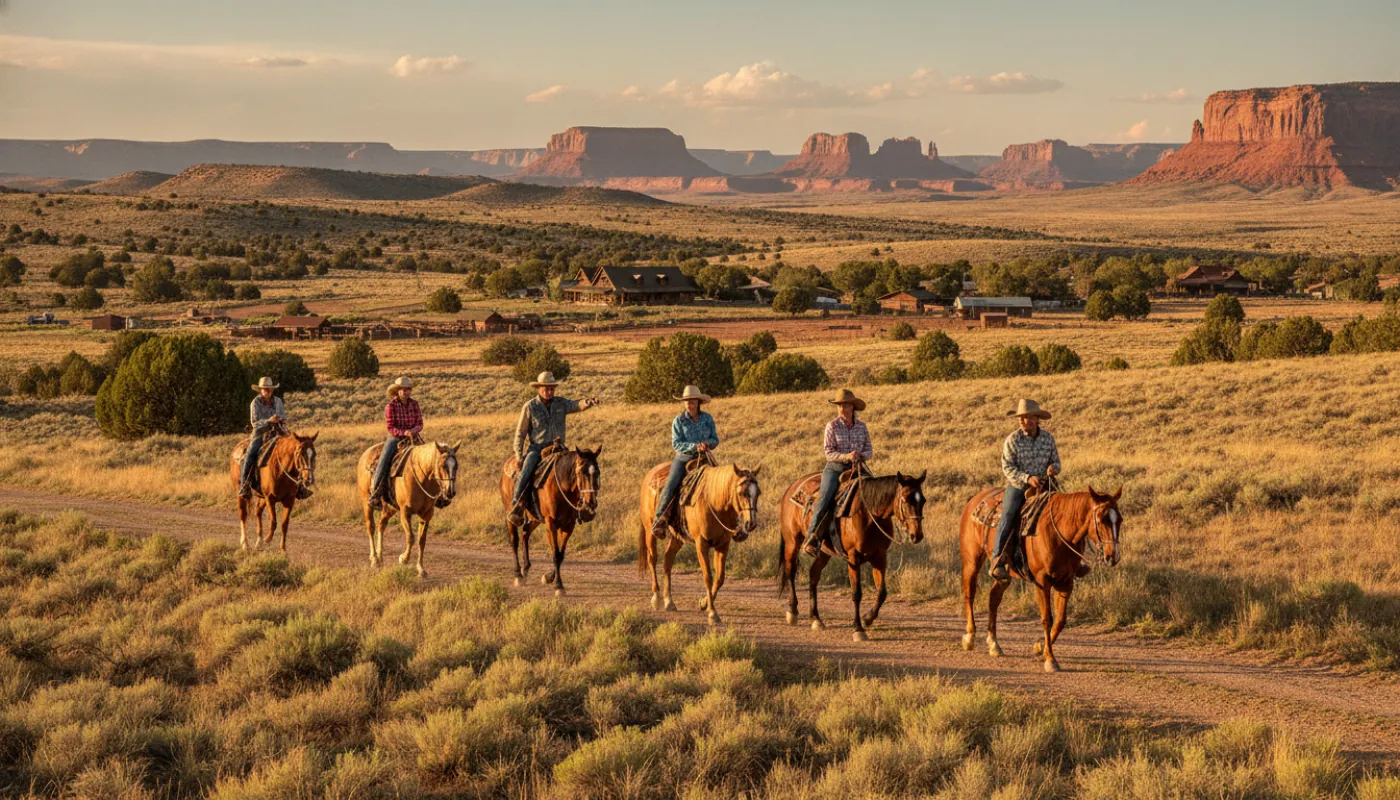
What you'll actually spend your time doing is often different from what beginners imagine. Guest ranches typically combine group trail rides with instruction, ranch chores, and social time. The emphasis varies by property, but most spend the majority of time in the saddle on group trails rather than in formal lessons.
A typical day might start with breakfast, followed by a guided morning ride (usually two to three hours). After a lunch break, there's often another shorter afternoon ride or optional activity. Evening brings communal meals and sometimes rides at sunset or organized social time. Some ranches include basic horsemanship clinics (grooming, saddling, basic groundwork), especially designed for beginners.
The physical demands are real. If you're not accustomed to sitting a saddle, your legs, lower back, and seat will know it. Most ranches warn of this, but actually experiencing it is different from hearing about it. By day two or three, soreness is normal and usually easing by the end of a week. Riders who start with some upper-body or core strength tend to feel less exhausted, but fitness isn't a prerequisite for enjoyment.
The social aspect is often underestimated. Guest ranches attract people from across the country with a shared interest in riding and rural experience. The guides and wranglers are usually good storytellers and often know a lot about the land and local wildlife. This community element is part of what makes multi-day stays memorable, you're learning alongside others, not taking a solo lesson.
Setting Realistic Expectations
Beginner riders often expect to canter by day two or to cover the same ground as experienced riders. Some ranches deliver on this; most don't, and they shouldn't. Cantering feels great but requires balance and security that usually takes a few days of solid riding to develop. Expecting it on a beginner's second ride sets you up for either disappointment or a safety concern.
Similarly, if you're uncomfortable at the trot initially (it's choppy and takes coordination), you won't suddenly enjoy an all-day trot on day one. Gradual progression is healthier and more sustainable. A ranch that promises you'll be "flying across open country" as a beginner is overselling.
That said, beginner guests almost always leave wishing they could stay longer. The combination of new skill, physical challenge, and time outside creates something special. Knowing that you successfully rode a horse, managed initial fear, and finished a full week of riding is its own reward, often a bigger one than cantering or covering miles.
Planning Your Visit and Getting Ready
Choosing when to visit matters. Shoulder seasons (spring and fall) often have smaller groups, which means better instruction and horse matching. Summer attracts more visitors, which can mean larger group rides and longer waits for breakfast. Busier periods also mean ranches are working harder to manage turnover, potentially with less attention to each individual guest.
Budget for a week if possible. Shorter stays, long weekends, can work, but you'll spend most of your energy managing soreness and finding your balance. A full week lets you settle into the rhythm, actually learn something, and wake up on the last morning wishing for more.
Before booking, verify that the ranch is transparent about beginner experience. Call, email, or video chat with a real person, not a website. Ask specific questions: What's your newest rider experience? How many guests are non-equestrians? What horses do you typically use for first-timers? Their answers will tell you a lot about where they stand with beginners.
Pack long pants (jeans are fine), closed-toe boots with a heel, layers, and sunscreen. Most ranches provide helmets; bring your own if you prefer a specific fit. Ask ahead about what's provided versus what you need to bring. A well-chosen guest ranch teaches you not just how to ride, but why people fall in love with horses. Start your search by asking for referrals from local riding instructors or checking reviews from other beginner riders. Your first ranch vacation should feel like an invitation, not a test.