Dressage, often called "horse ballet" by those who've never tried it, is one of the most misunderstood riding disciplines. Beginners catch glimpses of it in Olympic broadcasts: intricate patterns, perfectly rhythmic footfalls, and horses that seem almost to dance. But dressage isn't a spectator sport reserved for elite riders and six-figure horses. It's a foundational discipline that teaches fundamental horsemanship, improves your seat and balance, and builds a partnership between horse and rider rooted in clear communication and mutual respect. Whether you're exploring English riding for the first time or looking to deepen your skills after years in the saddle, dressage offers a structured path forward. This guide walks through what dressage actually is, how it differs from other disciplines, and the practical steps to start your own dressage journey.
What Is Dressage?
Dressage comes from the French word dresser, to train, and that's precisely what it is: the systematic training of horse and rider to achieve harmony, balance, and obedience through refined communication. At its core, dressage is a discipline that emphasizes proper movement, straightness, and responsiveness to subtle cues. A well-trained dressage horse moves with cadence and engagement, using its hindquarters to generate power while maintaining a light, forward frame.
What makes dressage different from general riding is its explicit focus on movement quality and the partnership between horse and rider. In dressage, precision matters: transitions between gaits should be prompt and clean, circles should be round, and lateral movements should be executed with exact timing and geometry. But this precision isn't for show alone, it's built on a foundation of trust and clear communication. A horse that responds to your weight, leg, and rein aids with sensitivity and obedience becomes safer, more athletic, and more enjoyable to ride in any context. Many riders who start in dressage carry those skills into trail riding, ranch work, or jumping, because the fundamentals translate everywhere.
The levels in dressage are clearly defined, from Introductory (walk and trot only at the first tests, with a small canter circle introduced at Intro Test C), through Training Level, where cantering becomes standard, up to the upper levels like Grand Prix, with advanced movements like piaffe, passage, pirouettes, and flying changes. A beginner doesn't jump straight to Grand Prix, the journey is gradual, and each level builds on the previous one. This structured progression appeals to riders who like clear goals and measurable progress. You know exactly what skills to master before moving forward.
How Dressage Differs from Western Riding
The differences between dressage and western riding are visible to anyone watching, but beginners often misunderstand the roots of those differences. They're not just about saddle shape or horse breed, they reflect fundamentally different traditions and priorities. English/dressage riding evolved from European cavalry and sport traditions, emphasizing precision, athletic partnership, and forward movement. Western riding grew from practical ranch work, prioritizing comfort in long hours, deep seats for rough terrain, and direct rein handling suited to working cattle and long distances.
In dressage, the rider sits deep in the saddle but carries their upper body upright with shoulders back, weight balanced vertically over their hips. The horse is ridden forward with an engaged hindquarter and light, responsive contact with the mouth, a continuous, subtle conversation through the reins. Lateral movements like side passes and half-passes are used to refine obedience and balance. The emphasis is on the horse's self-carriage and willingness to move into the bit with impulsion.
Western riding favors a deeper, more relaxed seat and often uses one-handed, loose-rein steering. The horse is cued largely through weight shifts and leg position, with rein contact kept light and directional rather than communicative. For ranch work and long distances, this approach is efficient and practical. For dressage, the constant, light contact and forward-moving frame are non-negotiable because they're the language the discipline speaks. Neither approach is "better", they're different tools for different jobs. But if you want to pursue dressage, you'll need to learn the dressage seat and the classical aids system.
Getting Started with Dressage Lessons
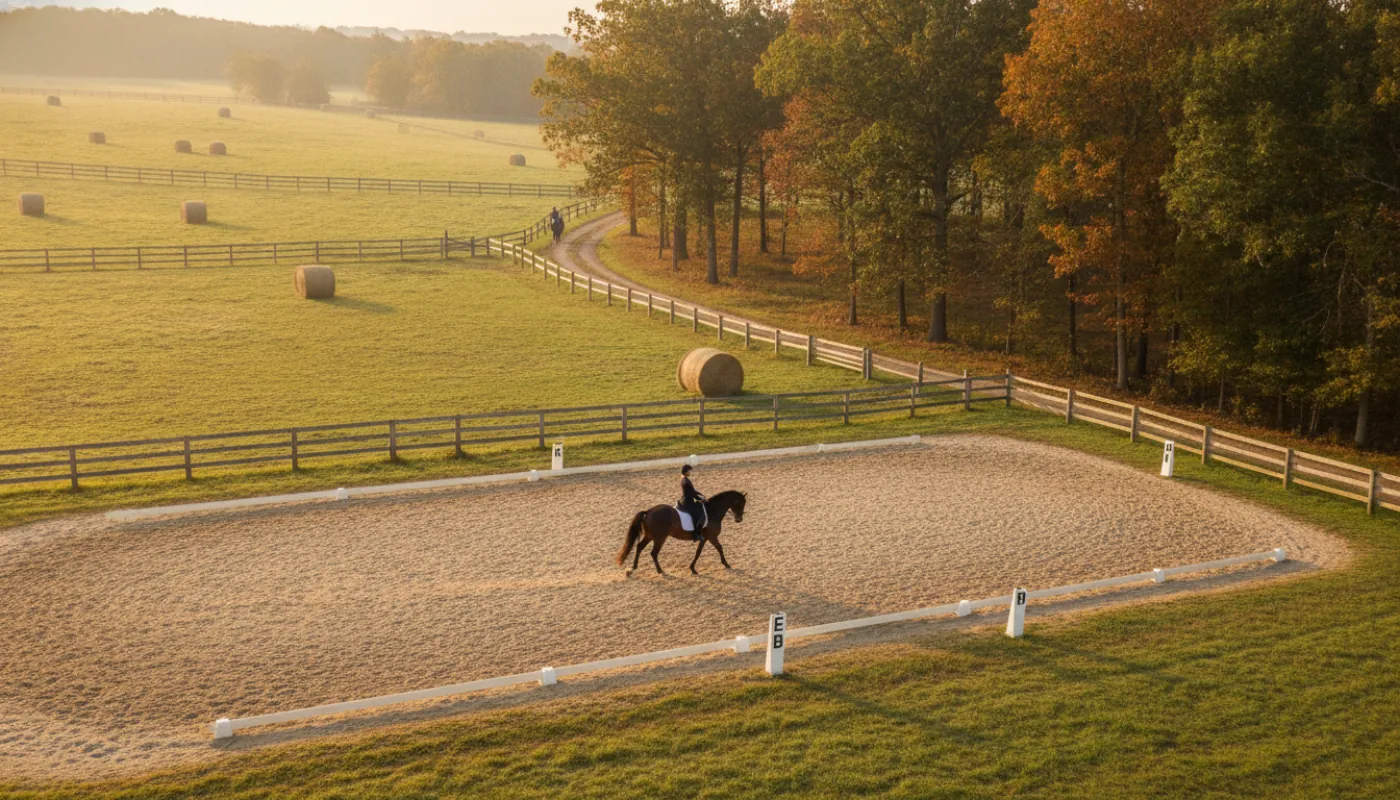
The single most important step in beginning dressage is finding qualified instruction. Unlike trail riding, where a patient horse and a gentle coach can get you reasonably far, dressage requires someone who understands the discipline deeply enough to set you on the right path from the start. Poor habits (gripping with your knees, holding your breath, uneven contact, or collapsing at the hip), are far easier to prevent than to fix two years later.
Look for instructors with recognized credentials or a track record in dressage: whether that's the USDF (United States Dressage Federation) Certified Instructor/Trainer program, other recognized coaching credentials, or strong competition results under USEF, the national governing body for the sport. Many stable operators and lesson facilities offer dressage instruction, and a good instructor will assess both you and your horse (if you have one) honestly and develop a realistic plan. Early lessons typically focus on fundamental position (how you sit, where your legs stay, how your hands follow the motion), and basic aids: how to ask the horse to trot, canter, and halt with quiet, precise movements.
Expect lessons to feel slower and more technical than recreational riding. You might spend thirty minutes perfecting straight lines, circles, and transitions at the walk and trot before moving to canter. This deliberate pacing isn't punishment, it's the only way to build muscle memory and understand how your position affects the horse's movement and responsiveness. Many beginners find this refreshing once they experience the payoff of a perfectly balanced, willing horse responding to invisible cues.
Choosing Your First Dressage Horse
If you don't yet own a horse, selecting one suited to dressage is crucial. Not every horse thrives in dressage, and starting with the wrong mount can derail your progress or teach you bad habits you'll carry forward.
Dressage horses benefit from natural balance, athleticism, and temperament. Breeds with dressage heritage (Warmbloods (German or Dutch), Thoroughbreds, and some Arabians), often excel, but any horse with the right attributes can do dressage. What matters more than breed is conformation: good legs, a strong back, and hindquarters that can engage and push forward. A horse should be sound and free from lameness or chronic pain, which can manifest as resistance or stiffness that you'll misinterpret as disobedience.
Temperament is equally important. A dressage horse should be willing to work, responsive to the aids, and calm enough to focus. A nervous, hot horse is possible to train but makes the journey slower and more frustrating for a beginner rider. If you're new to the discipline and shopping for your first dressage horse, lean toward maturity and experience; a horse that's already trained to mid-levels will forgive mistakes and carry you through your learning curve far better than a young, untrained prospect.
Building Your First Dressage Tack Kit
Dressage requires specific tack, and while it's tempting to cobble together what you have, proper gear makes a tangible difference. An English saddle designed for dressage (not jumping) has a straighter flap, deeper seat, and forward-cut panels that position your leg underneath you. A flat English bridle with a snaffle bit is the standard for lower levels. Dressage bits come in many styles, but a simple, jointed snaffle is typical for beginners, it's forgiving and gives clear feedback.
Beyond basics, you'll need riding clothes that suit the discipline. Dressage isn't as formal as jumping at the upper levels, but darker colors, long-sleeved shirts, and tidy boots are expected even at local shows or lessons. Tall black boots aren't strictly necessary when starting out, but riding tights and paddock boots are budget-friendly and still appropriate. Don't skimp on a safe helmet, properly fitted riding boots with a heel, and a saddle that fits both horse and rider. Saddle fit is fundamental, a poorly fitting saddle can make riding uncomfortable for the horse, directly undermining the trust and partnership that dressage is built on.
What's Next After Your First Lesson
Once you've found instruction and started riding, the road ahead is clear: practice, more lessons, and gradual progression through the levels. Many beginners ride once a week initially, with private or semi-private lessons more effective than group instruction when you're building foundational skills. As you progress and start showing (if that interests you), you'll discover a national framework for dressage competitions ranging from local schooling shows to recognized championships.
Dressage at the beginner level is about mastery of the fundamentals, not athletic feats. You'll spend weeks perfecting your sitting trot, months getting smooth canter transitions, and seasons building the subtle feel required for lateral movements. The pace can feel slow if you're impatient, but riders who embrace that gradual building often find it deeply rewarding. You're not just learning to ride a discipline; you're learning to communicate with a 1,000-pound animal in a language of balance, weight, and intention, and that conversation is worth the patience it takes to master.