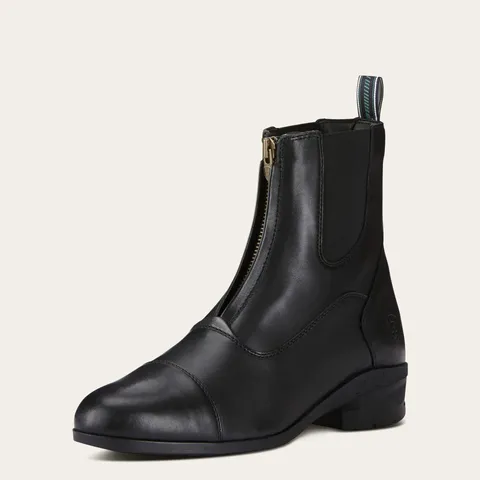
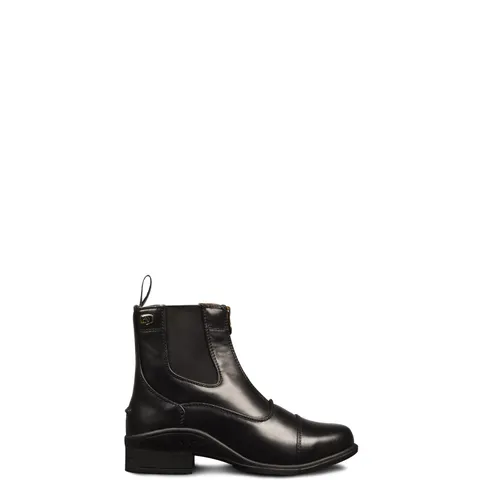
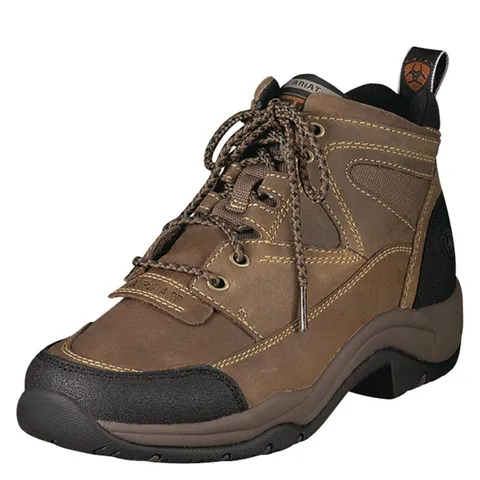
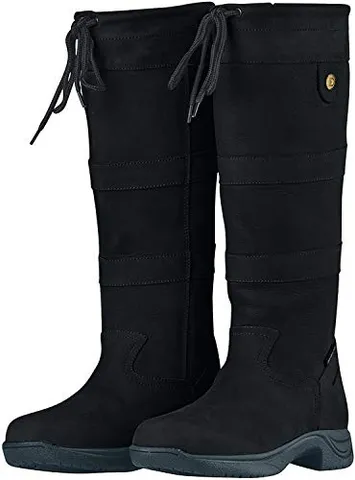
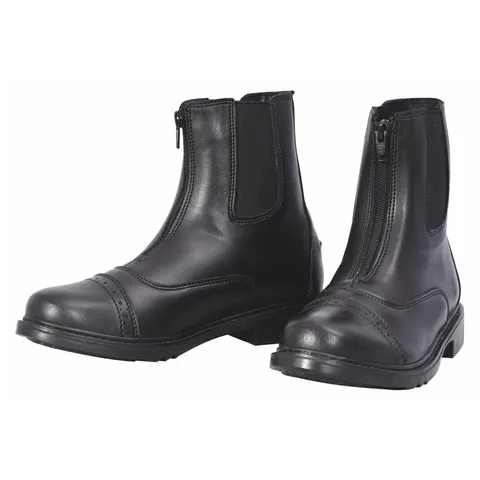
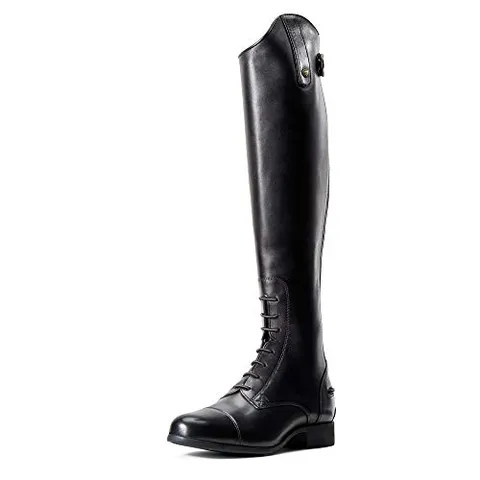
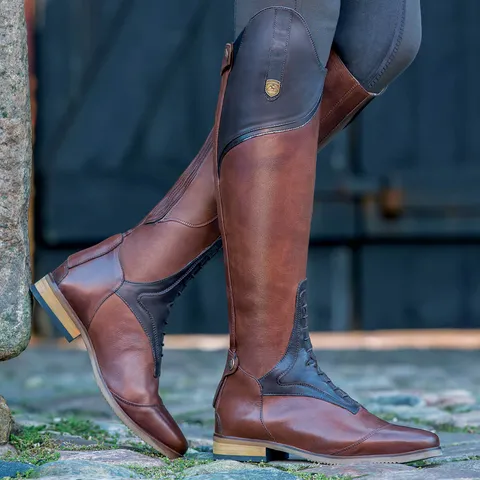
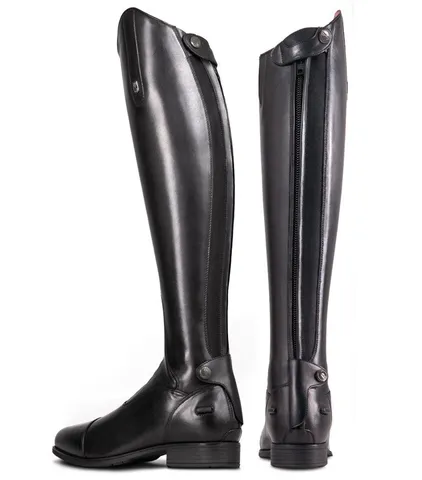
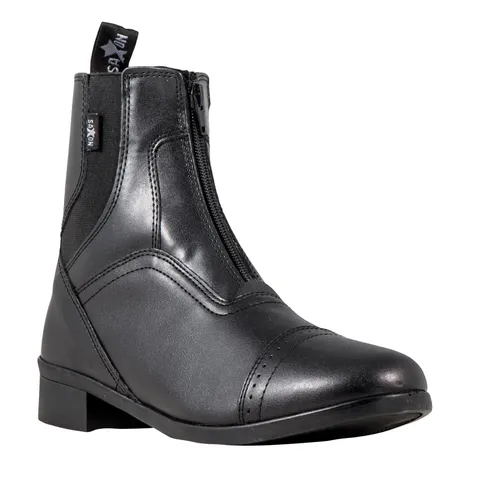
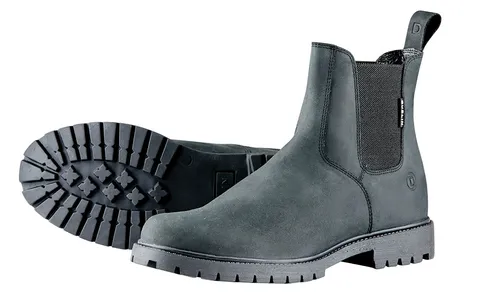
For new riders, the right boot is less about looking the part and more about safety and staying balanced in the saddle. Every boot below shares two non-negotiables: a smooth or lightly treaded sole that slides freely in and out of the stirrup, and a defined heel (roughly one inch) that stops your foot from sliding all the way through. That combination is what keeps you from getting hung up in an emergency, and it's exactly why a hiking boot or sneaker is a bad idea around horses no matter how comfortable it feels.
Beginners and lesson students almost always start with a paddock boot (an ankle-height boot, usually paired with half chaps) because it's affordable, walkable around the barn, and forgiving on fit. Tall boots, field and dress styles, come later, once you're showing or simply want one polished piece instead of a boot-plus-chaps combo. Trail and endurance riders are a separate case: they spend hours in the saddle and on their feet at rest stops, so they lean toward waterproof, cushioned, hiker-influenced designs that survive mud and creek crossings.
We've spanned the market deliberately, from sub-$50 synthetics that get a tentative beginner through their first season to $380 full-grain show boots built to last years. The goal is to show you what each price jump actually buys (better leather, a real break-in, longer-lived soles and zippers), so you can decide where your money is best spent for the riding you're actually doing.